
WELCOME BONUS 300%
UP TO €2000 + 100
FREE SPINS
UP TO €2000 + 100
FREE SPINS
Home → Blackjack
Blackjack at Flagman Casino: Variants, Rules and Payouts
How long does a Live Blackjack round take?
Infinite Blackjack operates with unlimited seats at tables where the maximum stake reaches 5,000 EUR. The continuous dealing structure allows players to join the action without waiting for a specific seat to open up during peak hours. This format ensures that the game flow remains uninterrupted regardless of the number of participants joining the virtual table.
Lightning Blackjack accommodates an unlimited number of players while offering stakes between 1 and 2,500 EUR per hand. The presence of lightning multipliers up to 25x adds a variable layer of excitement but does not significantly alter the duration of individual rounds. Players engage with standard betting phases before any potential multiplier effects are applied to winning hands.
Blackjack Party features two moderators creating a lively atmosphere within a stake range of 1.00 to 1,000 EUR. The social element introduced by the hosts may slightly extend the time required for each round due to interactive commentary. Despite this variation, the core mechanics remain consistent with standard live dealer timing expectations.
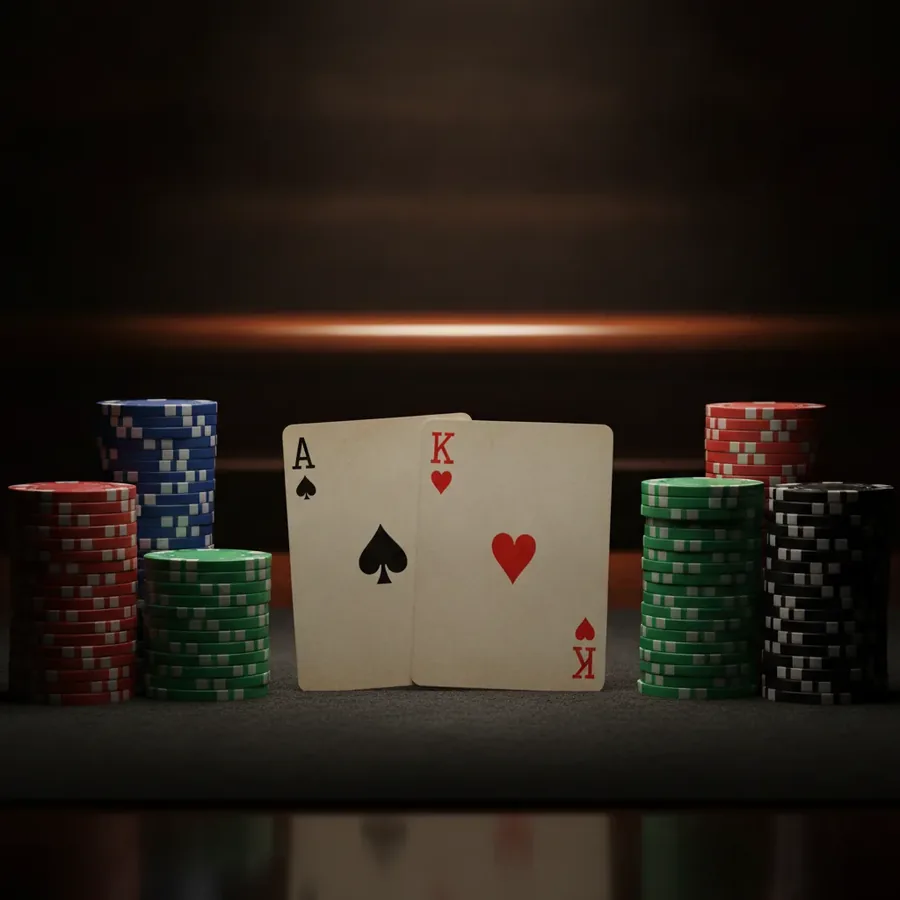
Side Bets Increase House Edge to 5 Percent
Blackjack Insurance is a separate side bet that pays 2:1 if the dealer has a blackjack, but it carries a house edge of 7.47%. This specific wager applies when the dealer shows an ace and requires a separate stake up to 50% of the main bet. Basic strategy dictates always rejecting this option unless card counting reveals a true count greater than or equal to +3.
Infinite Blackjack includes four distinct side bets: Any Pair, 21+3, Hot 3, and Bust It. These additional wagers contribute to a higher overall house edge compared to the base game RTP of 99.47%. Players engaging with these options must accept that the theoretical return decreases significantly from the main game's favorable odds.
Lightning Blackjack also offers side bets alongside its unique multiplier feature, maintaining an RTP of 99.56% for the primary game. The inclusion of these extra betting opportunities increases the complexity of the payout structure on every single hand dealt. Analytical review suggests avoiding these bets due to their substantially reduced expected value over the long term.
Six Decks to Eight Decks in the Shoe
Blackjack 6 Decks with S17, DAS, and DOA rules provides an RTP of 99.54% against a house edge of 0.46%. The use of six decks instead of eight reduces the house advantage by approximately 0.02 percentage points compared to larger shoe configurations. This configuration requires strict adherence to basic strategy to maintain the optimal theoretical return for the player.
Standard variations often utilize six to eight decks, with the Blackjack Insurance variant specifically noting a range of 6–8 decks. Increasing the deck count generally elevates the house edge slightly due to reduced penetration efficiency and shuffled card distribution probabilities. Players should prefer games using fewer decks to maximize their statistical advantage during gameplay sessions.
The transition from eight decks to six decks improves the player's position by lowering the inherent casino advantage. While the difference appears marginal at 0.02%, it accumulates significantly over thousands of hands played at high stakes. Games like Blackjack Liberal Vegas Strip further optimize this by combining fewer decks with liberal rule sets for superior returns.
One Deck vs Eight Decks in House Edge
Blackjack Ein Deck offers a classical rule set with a 3:2 payout, achieving an impressive RTP of 99.85% and a house edge of just 0.15%. Having only one deck reduces the house advantage by approximately 0.48 percentage points compared to an eight-deck shoe. This single-deck format represents the most mathematically favorable environment available for strategic players.
However, single-deck games frequently compensate for their low house edge by altering payout structures, such as reducing blackjack payouts to 6:5. If a one-deck game offers 6:5 instead of 3:2, the house edge increases by exactly 1.39 percentage points. This negative adjustment completely negates the benefit gained from playing with a smaller number of cards.
Comparing single-deck to eight-deck scenarios highlights the critical importance of payout ratios over deck count alone. A six-deck game paying 3:2 (RTP 99.54%) outperforms a single-deck game paying 6:5 (RTP 98.15%). Players must prioritize the 3:2 payout structure to ensure they are not losing value despite playing with fewer decks.
Error insurance: 7 percent additional house edge
Blackjack Insurance carries a steep house edge of 7.47%, making it one of the worst bets in the casino. This side bet is triggered only when the dealer shows an ace, allowing players to wager up to 50% of their original stake. Accepting this bet without advanced card counting skills guarantees a significant long-term financial loss for the average participant.
The mathematical disadvantage of insurance stems from the probability that the dealer holds a ten-value card, which occurs roughly 30% of the time. With a 2:1 payout, the bet breaks even only if the dealer has exactly a ten, but the actual frequency favors the house heavily. Standard deviation calculations show that this volatility combined with the high edge makes it a risky proposition.
Even in liberal variants like Liberal Vegas Strip with an RTP of 99.72%, taking insurance remains statistically incorrect for non-counters. The base strategy explicitly advises always declining this offer unless the true count reaches +3 or higher. Most casual players fail to track counts accurately, leading to repeated exposure to this high-edge trap.
Blackjack variants at a glance
| Variant | Payout | House edge | Rule | Bet range |
|---|---|---|---|---|
| Blackjack Liberal Vegas Strip (liberale Regeln, 3:2) | 99.72% | 0.28% | Günstigste Regelkombination: S17 + DAS + Resplit + Late Surrender. Standardabweichung 1,15 | Blackjack 3:2, Gewinn 1:1 |
| Blackjack Insurance / Versicherung (6–8 Decks) | 92.53% | 7.47% | Separate Nebenwette bis 50% der Hauptwette, wenn der Dealer ein Ass hat. Basisstrategie schreibt IMMER Ablehnung vor (außer Karten zählen bei True Count ≥ +3). Bei einem Deck Vorteil ≈ 5.88% | Insurance 2:1 |
| Blackjack Auszahlung 6:5 statt 3:2 (6 Decks) | 98.15% | 1.85% | Ersatz von 3:2 durch 6:5 fügt exakt +1.39 Prozentpunkte zum Vorteil des Casinos hinzu – stärker als jede andere Regeländerung. Bei $10 Einsatz zahlt Blackjack $12 statt $15. | Blackjack 6:5, Gewinn 1:1 |
| Blackjack 6 Decks, S17, DAS, DOA, Auszahlung 3:2, Basisstrategie | 99.54% | 0.46% | Dealer steht auf Soft 17; Verdopplung auf jeder Zweierkarte; Verdopplung nach Split erlaubt; keine Aufgabe. Basisstrategie ist für diesen Wert zwingend | Blackjack 3:2, normaler Gewinn 1:1, Insurance 2:1 |
| Blackjack Surrender (Late Surrender) – Regel-Effekt | n.a. (Regel-Modifikator) | −0.08 Prozentpunkte | Spieler gibt Hand nach Dealer-Blackjack-Prüfung auf, verliert die Hälfte des Einsatzes. Verbessert RTP um ca. 0.08 Prozentpunkte. Early Surrender ist wesentlich wertvoller (bis −0.6 Prozentpunkte), aber extrem selten. | Rückzahlung 50% des Einsatzes |
| Blackjack Ein Deck, klassische Regeln, 3:2 | 99.85% | 0.15% | Weniger Decks = niedrigerer Vorteil; ein Deck gibt ca. −0.48 Prozentpunkte gegenüber 8 Decks. Oft durch 6:5 Auszahlung kompensiert. | Blackjack 3:2, Gewinn 1:1 |
Bet two percent of bankroll per hand
The Blackjack 6:5 payout rule alters the mathematical expectation significantly compared to the standard 3:2 variant. A $10 wager returns only $12 under the 6:5 structure, whereas the traditional format yields $15 for the same winning hand. This discrepancy adds exactly 1.39 percentage points to the house edge, making it the most detrimental rule change available in modern blackjack tables.
Classical single-deck games offer a much lower house advantage of 0.15 percent due to fewer cards in play. Reducing the deck count from eight to one improves the player's odds by approximately 0.48 percentage points against the casino. However, this benefit is often neutralized if the table applies the unfavorable 6:5 payout structure instead of maintaining the superior 3:2 ratio.
Specific rule modifiers like Dealer Hits Soft 17 increase the house edge by 0.22 percentage points, reducing the overall return to player. Conversely, allowing Resplit Aces improves the RTP by 0.08 percentage points, while Double After Split offers a further 0.14 percentage point boost. These technical adjustments cumulatively determine the true cost of playing each hand at the virtual table.
Infinite Blackjack allows unlimited seats with wagers ranging from 1 to 5,000 EUR, providing high limits for serious players. The game features four side bets including Any Pair and Bust It, which carry their own distinct house edges separate from the main game. Players must manage their bankroll carefully across these additional betting opportunities to maintain long-term profitability.
Insurance Pays 2:1 Yet Still Costs Money
Blackjack Insurance is a separate side bet paying 2:1 when the dealer shows an Ace, but it carries a steep house edge of 7.47 percent. For six to eight decks, this wager significantly reduces the overall return on investment compared to the main game action. Basic strategy dictates that players should always decline insurance unless they are counting cards and hold a true count of plus three or higher.
The theoretical return for the insurance wager stands at 92.53 percent, indicating a substantial long-term loss for the participant. In a single-deck game, the house advantage drops slightly to 5.88 percent, yet it remains far worse than the primary blackjack hand. Accepting this bet essentially guarantees a negative expectation over time, eroding the bankroll faster than standard gameplay would.
Lightning Blackjack includes lightning multipliers up to 25x on winning hands, offering volatile potential alongside the standard insurance option. The base RTP for this specific variant is 99.56 percent, which is quite competitive before considering the impact of insurance decisions. Players must weigh the immediate safety of the insurance payout against the statistical certainty of losing value on that specific bet.
Standard liberal Vegas Strip rules provide a much safer environment with a house edge of just 0.28 percent and no insurance temptation. This configuration includes late surrender and resplitting, maximizing the player's chances without needing risky side bets. Avoiding insurance entirely preserves the integrity of the basic strategy and keeps the effective house edge near its minimum threshold.
Infinite Blackjack vs Classic Seven-Seat Table
Infinite Blackjack features unlimited seating with wager limits extending from 1 to 5,000 EUR, accommodating high-volume professional players effectively. The game utilizes four distinct side bets such as Hot 3 and 21+3, which add volatility to the standard blackjack flow. Its reported RTP is 99.47 percent, reflecting the specific rule set and the inclusion of these optional betting avenues.
Classic seven-seat tables typically enforce stricter limits and fewer players per round, creating a more traditional casino atmosphere. Evolution’s Lightning Blackjack caps wagers between 1 and 2,500 EUR while introducing multipliers up to 25x for dramatic payouts. This version maintains a slightly higher RTP of 99.56 percent, balancing the excitement of multipliers with reasonable mathematical expectations.
Comparing the two reveals that Infinite Blackjack offers greater accessibility for large groups, whereas Lightning Blackjack provides higher variance through its multiplier system. Both variants rely on the same underlying blackjack mechanics but differ in how they structure side bets and player interactions. The choice depends on whether the player prioritizes volume and limit flexibility or seeks occasional large wins via lightning bonuses.
Liberal Vegas Strip rules represent the optimal baseline with a house edge of 0.28 percent and standard deviation of 1.15. Unlike the live dealer variants, this classic setup avoids complex side bets that dilute the core game value. Players seeking maximum efficiency should compare these static rules against the dynamic but potentially less predictable live dealer offerings.
Clicked Too Late: Hand Is Automatically Held
When a player fails to act within the designated time limit, the software automatically holds the current hand state. This mechanic prevents delays in the game flow but may result in suboptimal decisions if the player intended to split or double down. The system enforces strict timing protocols to ensure all participants remain engaged during rapid-fire dealing sequences.
Blackjack Party features two moderators creating a party atmosphere, requiring quick responses from all seated players simultaneously. Wagers range from 1.000 to 1.000 EUR, demanding precise timing for any strategic moves like splitting pairs. Missing the decision window means accepting the default outcome, which could be a loss if the hand was weak.
Infinite Blackjack allows four side bets, but the main hand decision remains subject to the same automatic hold rule. Players must balance attention between the primary game and optional bets like Any Pair to avoid missing critical timing windows. The unlimited seat count increases pressure to act quickly, as delays affect multiple participants waiting for their turns.
Late Surrender improves the house edge by 0.08 percent but requires active player intervention before the automatic hold triggers. If the dealer checks for blackjack first, the player can choose to forfeit half the bet rather than risk total loss. This option adds a layer of complexity that demands constant vigilance to execute correctly before time expires.
Stand-on-17 Rule and Its Meaning for Players
The Stand-on-17 rule requires the dealer to stand on a soft 17, which is statistically favorable for the player compared to hitting. This rule reduces the house edge by improving the probability of the dealer busting on subsequent draws. Games adhering to S17, such as the Liberal Vegas Strip variant, benefit from this constraint on the dealer's actions.
Conversely, Dealer Hits Soft 17 increases the house edge by 0.22 percentage points, negatively impacting the player's long-term returns. This rule forces the dealer to draw another card when holding an Ace and a six, increasing the chance of improvement. Tables lacking this restriction are inherently more expensive to play, raising the overall cost of the gaming session.
Blackjack 6 Decks with S17, DAS, and DOA rules delivers a house edge of 0.46 percent when using perfect basic strategy. The combination of standing on soft 17 and allowing doubling after split creates a robust framework for minimizing losses. Players must adhere strictly to basic strategy charts to achieve this optimized return rate effectively.
Lightning Blackjack maintains an RTP of 99.56 percent despite its unique multiplier features, suggesting careful balancing of dealer rules. The game likely employs S17 to compensate for the volatility introduced by the lightning multipliers up to 25x. Understanding these rule variations helps players select tables that align with their risk tolerance and strategic preferences.
Blackjack doesn't count for every bonus offer
The Blackjack Party table at Evolution imposes a maximum bet limit of 1.000 EUR, which is significantly lower than the Infinite Blackjack cap of 5.000 EUR. This strict wagering restriction prevents high-stakes players from utilizing large bankrolls to clear bonus requirements on this specific variant. Consequently, players must adjust their betting strategy to remain compliant with the platform's safety protocols.
Lightning Blackjack allows bets ranging from 1 to 2.500 EUR and features multipliers up to 25x, yet it still contributes minimally to bonus turnover. The game offers an RTP of 99.56%, but the primary constraint is its low contribution percentage towards the welcome bonus. This limitation ensures that volatility from side bets does not disproportionately impact the casino's risk exposure during promotional periods.
Blackjack Contributes Only 10 Percent to Wagering
Table games contribute exactly 10 percent to the wagering requirement, whereas slots contribute 100 percent to the same turnover target. A player depositing 100 EUR receives a 300% bonus of 300 EUR, resulting in a total balance of 400 EUR. To clear this amount, the player must generate 40 times the combined sum, equating to 16.000 EUR in total turnover.
When playing Blackjack variants like the Liberal Vegas Strip with an RTP of 99.72%, only 10% of each wager counts toward the mandatory turnover. Betting 100 EUR on a hand generates just 10 EUR of progress against the 16.000 EUR goal. This mathematical disadvantage makes clearing the bonus through table games significantly more capital-intensive than playing slot machines.
What doesn't count towards turnover at 10 percent?
Any variation of Blackjack, including the classic single-deck version with a house edge of 0.15%, falls under the 10% contribution category. The Insurance side bet, which pays 2:1 and carries a house edge of 7.47%, also adheres to this reduced contribution rate. Players attempting to utilize these specific mechanics will find their bankroll depleting faster relative to bonus clearance progress.
The Infinite Blackjack table, despite offering unlimited seats and side bets like Any Pair, restricts bonus eligibility to the standard 10% rule. Even though the base game RTP stands at 99.47%, the low contribution percentage remains the dominant factor for bonus hunters. This uniform treatment applies across all Evolution live dealer blackjack products regardless of their specific rule sets.
Chose Wrong Table for 5 EUR Bankroll
A 5 EUR bankroll is insufficient for the Blackjack Party table, which requires a minimum bet of 1.00 EUR per hand. With only five units available, a single losing streak or the standard house edge can quickly eliminate the entire balance. This lack of buffer makes sustained play impossible when attempting to meet the substantial wagering requirements of the welcome offer.
In contrast, the Lightning Blackjack table starts at 1 EUR, allowing slightly more flexibility for a small bankroll compared to higher-limit tables. However, the presence of Lightning Multipliers up to 25x introduces extreme volatility that can wipe out a 5 EUR stack instantly. Players should avoid such high-variance environments when their funds are critically limited and bonus clearance is the priority.
The Liberal Vegas Strip variant typically offers favorable rules but may have minimum bets exceeding the 5 EUR total bankroll capacity. Even if the minimum bet were 1 EUR, the 10% contribution rate means 50 EUR of actual wagering is needed to generate 5 EUR of turnover credit. This inefficiency makes small bankrolls impractical for clearing bonuses on any table game variant offered by the casino.
When does the table max bet apply?
The maximum bet limit of 1.000 EUR on Blackjack Party applies strictly during the active wagering phase of the welcome bonus. Violating this threshold by placing a larger wager voids the bonus and any associated winnings immediately. This rule is enforced to prevent players from using excessive stakes to artificially inflate their turnover progress.
Infinite Blackjack permits bets up to 5.000 EUR, which is five times higher than the Party variant's cap. This higher limit accommodates high-roller strategies but still subjects the player to the same 10% contribution rule for bonus clearance. Understanding these distinct limits is crucial for managing risk while navigating the bonus terms effectively.
Lightning Blackjack enforces a maximum bet of 2.500 EUR, sitting between the other two main variants in terms of stake allowance. This limit applies to the base game wager and excludes the value of any additional side bets placed on top. Players must ensure their total exposure per round stays within this boundary to maintain compliance with the casino's promotional conditions.
Contact
Live - online chat
Banking


Providers









Flagman Casino 2026